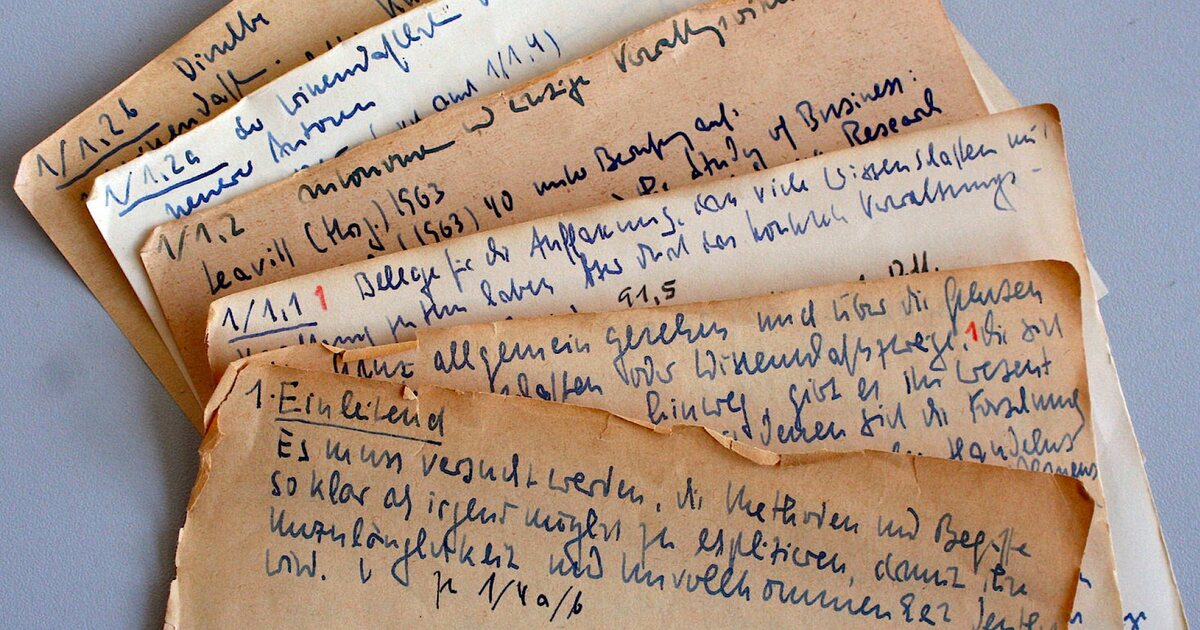

PARA organizes notes by what you are working on. A Zettelkasten organizes ideas by how they connect. Why they don't compete, and how to run both at once.
Zettelkasten vs PARA: Two Systems for Two Different Questions
New here? The reading path puts these essays in order: how to think about notes, how to choose a tool, and how to put it to work.
PARA organizes notes by what you are working on. A Zettelkasten organizes ideas by how they connect. Why they don't compete, and how to run both at once.
Why I built Jotaid, a personal knowledge engine for Mac and iPhone: concept-linked notes, a co-occurrence matrix, themes, and read-only MCP for AI agents.
Notes kept paper by paper produce a review written paper by paper. The concept matrix turns them around, and here is how to run it on your own notes.
AI is good at pointing out connections in your notes. Deciding what they mean is the part that builds your understanding, and it should stay with you.
Jotaid vs Obsidian: what the same [[link]] becomes in each app, where the two really differ, and how to use them together without giving up your vault.
How to read a co-occurrence matrix of your own notes: seven shapes to look for, what each one means, and what the grid cannot tell you.
Ten Obsidian alternatives compared by what they change, with prices checked on each official site and a table of what their Markdown support really means.
A personal knowledge engine keeps what you decided apart from what software worked out, so you and your AI agents can both pick up where you left off.
What a dot and a line mean in Obsidian, Logseq, Capacities and Jotaid, what users report about note graphs, and a workflow for turning a connection into an idea.
Obsidian, Notion, Capacities and Jotaid organise knowledge four different ways. The choice is not about features — it is about what your notes are made of.
What personal knowledge management means, from the 1999 paper that named it: five skills, four of them given a method, and why the fifth, relating ideas, is still left to you.
Apple Notes, Bear, Obsidian and Jotaid store notes in four different structures — and the structure decides which questions you can ask of them later.
A backlink records that two notes touched — never how, which way, how much, or since when. Why forty years of typed-link systems didn't fix that, and what does.
Zettelkasten, backlinks and knowledge graphs promise connected thinking and rarely deliver. Why the unit worth building around is the concept, not the note.